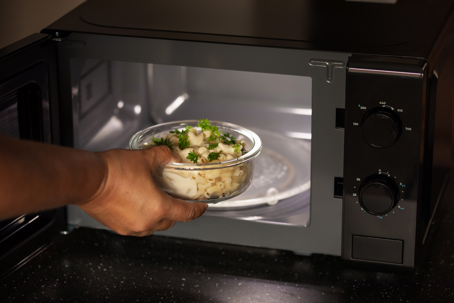
The timer counts down. The light comes on. The turntable spins.
Everything appears normal until you pull out your food and realize it's still cold.
A microwave that runs but doesn't heat is one of the most confusing appliance problems because it gives the impression that it's working. In reality, the parts that control the display and turntable are separate from the components that generate heat. When the heating system fails, the microwave can continue to look completely functional while doing very little.
If your microwave has stopped heating food, here's what may be happening behind the scenes and what you can safely check before scheduling a repair.
Why a Microwave Can Run Without Producing Heat
Microwaves rely on two different systems.
One system powers the display, control panel, interior light, cooling fan, and turntable. The other creates the microwave energy that heats food.
When the heating circuit develops a problem, the microwave may still power on and complete a full cooking cycle. The only thing missing is the heat itself.
This is why many homeowners assume the problem is minor at first. The appliance looks normal, but an important internal component has stopped doing its job.
Rule Out the Simple Possibilities First
Before assuming a repair is needed, it's worth checking a few basic items.
Verify the Power Level
Many microwaves allow users to reduce cooking power. If the power level was accidentally changed, food may warm very slowly or not appear to heat at all during shorter cooking cycles.
Check for Demo Mode
Some newer microwaves include a showroom or demo mode. In this setting, the display, light, and turntable operate normally, but the microwave does not generate heat.
A quick review of the owner's manual or a control panel reset may help determine whether this is the issue.
Try a Water Test
Place a microwave-safe cup of water inside and run the microwave on High for one minute.
If the water remains cool, the problem is likely related to the heating system rather than a programming or settings issue.
Magnetron Failure Is One of the Most Common Causes
The magnetron is the component responsible for creating the microwave energy that heats food.
When it fails, the microwave can still appear fully operational while producing no heat at all.
Some signs that may point toward a magnetron problem include:
- Food stays completely cold
- Loud buzzing or humming noises
- A burning odor during operation
- Repeated breaker trips when the microwave starts
Because the magnetron works with high-voltage components, diagnosis should be left to a qualified technician.
Door Switch Problems Can Prevent Heating
Every microwave contains safety switches inside the door assembly.
These switches confirm that the door is fully closed before allowing the heating system to operate.
If one becomes worn, damaged, or misaligned, the microwave may still run the fan, display, and turntable while preventing heat production.
You might notice:
- The microwave works intermittently
- Heating depends on how firmly the door is closed
- The door feels loose or misaligned
- Clicking sounds seem different than usual
Door switch problems are more common than many homeowners realize, especially on heavily used microwaves.
Other Components That Can Cause a No-Heat Condition
Several additional parts can stop a microwave from heating food.
High-Voltage Diode
The diode helps deliver the voltage needed by the magnetron. When it fails, heating often stops completely.
High-Voltage Capacitor
This component stores and releases electrical energy within the heating circuit. A failure here can prevent microwave energy from being generated.
Thermal Fuse
A thermal fuse protects the appliance from overheating. If it trips or fails, portions of the heating system may stop working.
Control Board Issues
Although less common, a faulty control board can interrupt communication between components and prevent proper heating cycles.
Determining which part has failed requires testing equipment and safety procedures that most homeowners do not have access to.
Check the Interior for Signs of Damage
One area that homeowners can safely inspect is the microwave cavity itself.
Pay attention to the waveguide cover, which is usually located along one side wall of the interior.
Look for:
- Burn marks
- Charring
- Cracks
- Holes
- Signs of arcing or sparking
A damaged waveguide cover can interfere with microwave performance and may indicate additional internal damage that should be evaluated.
Why Microwave Repairs Are Different From Other Appliance Repairs
Many appliance repairs can be approached with basic DIY troubleshooting.
Microwaves are different.
Even after being unplugged, certain internal components can retain a dangerous electrical charge. High-voltage capacitors, transformers, and related components can cause serious injury if handled improperly.
For that reason, manufacturers generally recommend that homeowners avoid opening microwave cabinets or attempting repairs involving internal electrical parts.
Basic inspections are fine. Internal repairs are best left to trained technicians.
Repair or Replace: Which Makes More Sense?
The answer often depends on the type of microwave.
For basic countertop models, replacement may make more sense when a major component fails, and the unit is already several years old.
For built-in, over-the-range, drawer-style, and higher-end microwaves, repair is often the more practical option. Replacing these units can involve cabinetry modifications, installation costs, and significantly higher equipment prices.
A professional diagnosis can help determine whether the repair cost justifies keeping the appliance.
Get Answers Before Replacing Your Microwave
A microwave that turns on but doesn't heat food is usually dealing with a specific component failure rather than a complete appliance breakdown.
The issue may involve the magnetron, door switches, high-voltage components, or another part within the heating system. Identifying the exact cause is the key to deciding whether repair is worthwhile.
If your microwave is running but leaving food cold, Affordable Appliance Repair provides microwave repair services for homeowners and businesses throughout the Phoenix area.
To discuss the issue or schedule service, call (480) 914-3381 or send us a message online.