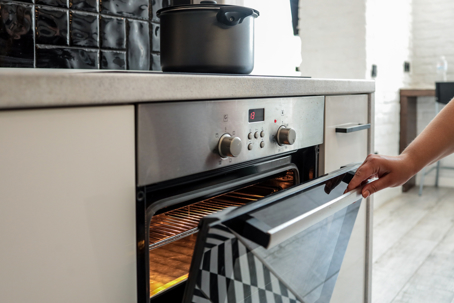
The same recipe, the same pan, the same rack position, and yet dinner keeps coming out wrong.
One batch of cookies is pale in the middle and nearly burnt at the edges. A casserole bubbles furiously on one side while the other side stays barely cooked. When this happens repeatedly, it usually is not your cooking—it is your oven.
Uneven heating is one of the most common oven complaints homeowners face. The good news is that these problems often leave clues long before the appliance stops working altogether. Knowing what those clues look like can help you determine whether a simple adjustment is enough or whether a repair is needed.
How to Tell If Your Oven Is Actually Heating Unevenly
A single disappointing meal does not necessarily mean there is something wrong with the appliance. Uneven heating tends to show up as a pattern.
Common Signs to Watch For
You may notice:
- Cookies browning more on one side of the baking sheet
- Roasted vegetables cooking unevenly across the pan
- Casseroles that are overcooked around the edges but underdone in the center
- Recipes taking significantly longer or shorter than expected
- Certain spots in the oven consistently producing different results
When these issues happen repeatedly across different meals, the oven becomes the likely suspect.
Try an Oven Thermometer Test
A simple oven-safe thermometer can provide valuable information.
Place the thermometer on the center rack and set the oven to 350°F. Once preheating is complete, wait another 15 to 20 minutes before checking the reading.
Small fluctuations are normal. Larger differences or inconsistent readings may indicate a temperature control or heat distribution problem.
Faulty Heating Elements Can Create Hot and Cold Spots
For electric ovens, the bake element and broil element work together to maintain consistent temperatures.
When the bake element begins to fail, it may still heat partially while struggling to distribute heat evenly throughout the oven cavity.
Common symptoms include:
- Food browning excessively on top
- Undercooked bottoms
- Longer baking times
- Visible damage such as blistering, cracks, or dark spots on exposed elements
Some modern ovens use hidden bake elements, making damage difficult to spot without further inspection.
A Temperature Sensor May Be Sending Incorrect Readings
Modern ovens rely on a temperature sensor to monitor heat levels.
If that sensor becomes inaccurate, the control system receives incorrect information and responds accordingly. The result can be temperature swings that make cooking unpredictable.
A faulty sensor may cause:
- Food to cook too quickly
- Food to cook too slowly
- Inconsistent baking results from one use to the next
- Temperatures that do not match the selected setting
Because the sensor directly influences how the oven regulates heat, even a small error can noticeably affect cooking performance.
Convection Fan Problems Can Affect Heat Distribution
Convection ovens use a fan to circulate heated air throughout the cooking cavity.
When that fan is not operating properly, hot air tends to collect in certain areas while cooler pockets develop elsewhere.
Signs of a possible convection fan issue include:
- Uneven browning
- Noticeable hot spots
- Longer cooking times
- Unusual buzzing, grinding, or rattling noises
Many homeowners first notice the problem when multiple trays of food cook differently despite being baked at the same time.
Common Causes in Gas Ovens
Gas ovens have a few unique components that can affect heating consistency.
Weak Gas Igniter
A gas igniter can weaken with age. Even if it still glows, it may not reach the temperature needed to operate efficiently.
Potential signs include:
- Slow preheating
- Delayed ignition
- Inconsistent temperatures
- Uneven cooking across the same rack
Dirty Burner Ports
Grease, food debris, and corrosion can partially block burner openings.
When flames cannot distribute evenly, heat patterns become uneven as well. Some areas of the oven may become significantly hotter than others.
Damaged Door Gasket
The gasket around the oven door helps keep heat inside.
If it becomes torn, flattened, or damaged, heat escapes during cooking. This can make temperature control more difficult and exaggerate other underlying problems.
Can Oven Calibration Fix the Problem?
Sometimes.
Many modern ovens allow minor temperature adjustments through the control panel. Calibration may help when the oven consistently runs slightly hot or slightly cold. For example, if your oven is always about 15 degrees off, a calibration adjustment can often improve accuracy.
However, calibration cannot repair failing components. If temperatures fluctuate dramatically, food cooks inconsistently, or certain areas of the oven remain hotter than others, there is usually a mechanical issue that needs attention.
When It Makes Sense to Schedule a Repair
There is a difference between a minor temperature adjustment and a repair issue.
Professional diagnosis is often worthwhile when:
- The oven is more than 25–50 degrees off target
- Uneven cooking persists after calibration attempts
- The appliance displays error codes
- A heating element appears damaged
- A gas oven has ignition or burner concerns
- Hot spots continue to affect cooking results
Many uneven heating problems can be traced back to a specific component rather than the entire appliance. Replacing the right part is often far more practical than replacing the oven itself.
Get Answers Before Uneven Heating Gets Worse
An oven that heats unevenly can waste ingredients, increase cooking times, and make even familiar recipes frustrating to prepare.
Whether the issue involves a heating element, temperature sensor, convection fan, igniter, or another component, identifying the cause is the first step toward restoring consistent performance.
For homeowners and businesses in the Phoenix area, Affordable Appliance Repair provides oven repair and appliance repair services for many major brands.
If your oven is no longer cooking evenly, call (480) 914-3381 or schedule service online.